HORUS GLOBE | Technology & Business | November 7, 2026
President Donald Trump has put a striking phrase at the center of his latest technology message: superintelligence. In a November 6 post on Truth Social (archived here), Trump voiced strong support for what he called “Super Intelligence (SI)” and suggested that states embracing it could benefit economically.
What the president actually said
Trump’s post expressed enthusiasm for superintelligence and described it as a potential source of wealth for American states. The statement was a political endorsement, not a detailed policy announcement. It did not identify a specific funding program, regulatory change, or implementation timetable.
Why the language matters
Artificial intelligence is already influencing software development, scientific research, manufacturing, and business operations. IBM’s overview of artificial superintelligence describes the term as a hypothetical form of AI that surpasses human intelligence. There is no universally accepted test for reaching that threshold, and Trump’s post did not define the term.
For business leaders, the important distinction is between today’s deployable AI systems and predictions about future systems. An enthusiastic statement from the White House may influence public debate, but it does not by itself establish that superintelligent AI exists or that its economic benefits are guaranteed.
The state-level business question
Trump’s reference to states points toward a practical question: where would the infrastructure and economic activity associated with more powerful AI systems be built? Data centers, electricity supply, networking capacity, technical talent, and local permitting are among the considerations that can shape technology investment. The U.S. Department of Energy has documented rising electricity demand from data centers, underscoring a real infrastructure challenge. Potential benefits must be weighed against costs, including power demand and public infrastructure needs.
For entrepreneurs and investors, the signal is worth watching, but the details matter more than the rhetoric. Concrete legislation, procurement decisions, company investment commitments, and independently measurable technological advances would provide stronger evidence of change.
Horus Globe perspective
The story is not that a new era of superintelligence has arrived. It is that the president has publicly framed advanced AI as an economic opportunity for U.S. states. Whether that message becomes policy—and who benefits if it does—remains an open question.
Sources and image credit
- Trump’s November 6, 2026 Truth Social statement (independent archive) — primary source for the reported remarks; the archive is not an official government website.
- IBM: What is artificial superintelligence? — background definition and technological context.
- U.S. Department of Energy: Data-center electricity demand — infrastructure context.
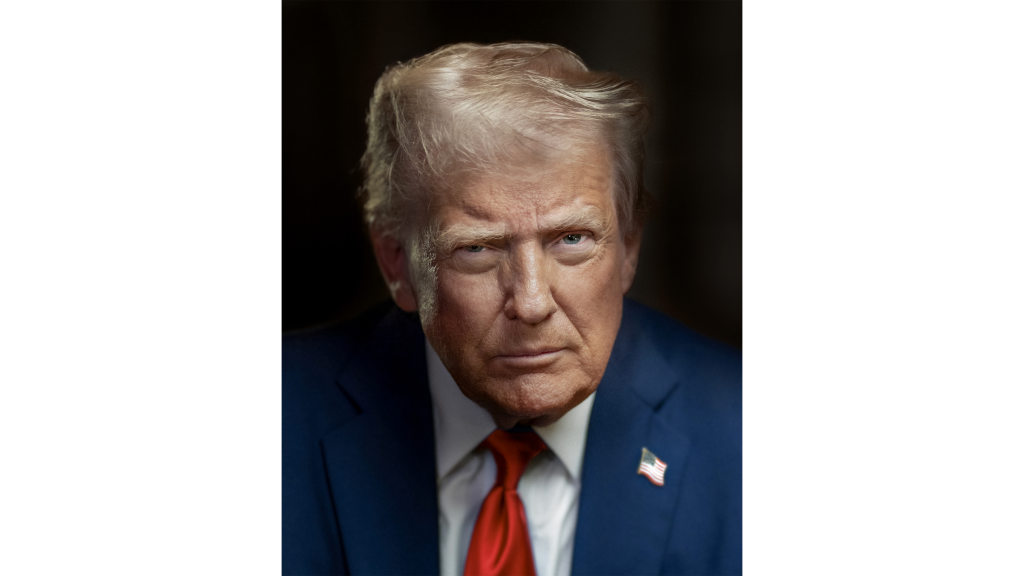
- Official presidential portrait (2025) — photo by Daniel Torok / The White House; U.S. government public-domain image.
Editorial transparency: Horus Globe did not originate Trump’s statement, IBM’s technical explanation, the Department of Energy’s findings, or the White House photograph. Those materials are credited and linked above. Horus Globe independently wrote this summary and analysis; it is not affiliated with, sponsored by, or endorsed by the cited people or organizations. Links are provided for readers to check the original material. Attribution does not replace any permission required for copyrighted material. Future economic and technological outcomes remain uncertain.